Like his cousin (and fellow Pulitzer Prize winner) Harper Lee, David Hanners crafts stories and vivid characters on the margins of gothic Americana.
One critic said David’s music “is like Townes Van Zandt doing Nebraska.” Another called it, “authentic, sparse prairie folk.” He grew up on the black-soil prairie of East Central Illinois, a landscape that churns out its own uncompromising art. Drive 20 minutes east of his hometown and you’re where James Jones wrote “From Here to Eternity.” Twenty minutes south takes you to the hometown of folk legend Burl Ives. Twenty minutes north and you’re in the hometown of “Citizen Kane” cinematographer Gregg Toland.
In 2025, he and Kevin Kadidlo collaborated on Llano Estacado and Slouching Towards Huntsville, powerful EPs that define Americana for audiences in British, where David now lives. Lauded by AmericanaUK, they are songs inspired by his time living on the Texas Panhandle — stories with depth, desolation, desperation and redemption.
His songs are known for vibrant storytelling. He brings characters to life in a way reminiscent of John Prine, Bill Morrissey, Steve Earle and Ray Wylie Hubbard.
That storytelling was one of the reasons his first record, Nothingtown, was named a Critic’s Year-end Top Ten selection by the Minneapolis Star Tribune. That record was followed by the 2009 release, The Traveler’s Burden.
In 2014, he released There Are No Secrets in This Town, again earning acclaim. The album of 11 songs inspired by an oral history interview of a Depression-era madam in Indiana, “plays out like a musical version of a McMurtry novel,” wrote Terry Paul Roland, a featured contributor to No Depression.
David is a winner of the Minnesota Folk Festival’s “New Folk” songwriting competition. Other artists have recognized his work; in 2010, famed photographer Wing Young Huie selected David’s “The Ballad of Mohamed Saleh” for the soundtrack of his groundbreaking University Avenue Project. David’s songs have also been featured at the John F. Kennedy Center for the Performing Arts as part of Laura Lundgren-Smith’s play “Digging Up the Boys,” a work about three trapped coal miners set in the 1930s South.
David has opened for national touring acts such as Tom Paxton, Bill Staines, Ellis Paul, Garnet Rogers and others.

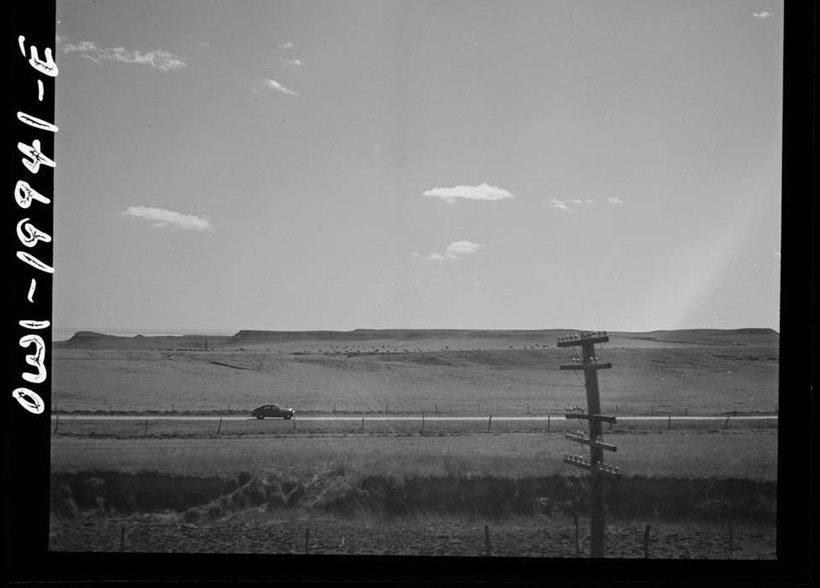
The photograph used on the website (and on the cover of the “Llano Estacado” EP) was taken by photographer Jack Delano (1914-1997) on the Llano Estacado in Texas. It was among photos he shot while employed by the Farm Security Administration, one of Franklin Roosevelt’s New Deal programs to fight rural poverty during the Great Depression. Even in a time of great economic turmoil, the Roosevelt administration believed it was important to have photographers, artists and writers document America. Even songwriters got involved; Woody Guthrie’s time writing songs for the Bonneville Power Administration in 1941 is considered among his most productive periods.
They did it because an honest portrayal of history is one of the legacies we owe future generations. At a time when the U.S. has a regime hell-bent on whitewashing history and lying to future generations, we need more Jack Delanos and Woody Guthries and Mark Rothkos and Willem de Koonings and Dorothea Langes and Jackson Pollocks and Ralph Ellisons and Aaron Coplands and all the rest.